

Curriculum
- 4 Sections
- 33 Lessons
- Lifetime
- Module 1: Digital Governance and AI Applications in the Public Sector15 ItemsLearning Objectives: Current state of the sustainability crisis – framing the urgency of sustainability risks and the role of technology in monitoring, forecasting, and policymaking, From projects to pathways: embedding medium- and long-term adaptation in budgets, policies, and development planning, Institutional alignment for sustainable governance: embedding adaptation, SDGs, and finance into a unified framework, and Understanding and scaling the scientific and technological tools for sustainable action.
- 1.1Key Terms
- 1.2Session 1.1: GovTech: Institutionalizing Innovation in Government
- 1.3Quiz1.1: Knowledge Check2 Questions
- 1.4Session 1.2: Current State of the Sustainability Crisis
- 1.5Session 1.3: EBA Briefing Notes – Ecosystem-based Adaptation
- 1.6Session 1.4 : Tech & Sustainability in the Public Sector – Lecture
- 1.7Session 1.4 : Applying Artificial Intelligence in Government Operations
- 1.8Quiz1.2: Knowledge Check2 Questions
- 1.9Session 1.5 : Understanding and scaling the scientific and technological tools for sustainable action
- 1.10Session 1.6 : IPCC AR6 (Adaptation & Risk Chapters)
- 1.11Session 1.7 : International Experiences and Case Studies: How GovTech Systems Work in Practice
- 1.12Quiz1.3: Knowledge Check2 Questions
- 1.13Session 1.8 : National Adaptation Plan Process
- 1.14Session 1.9 : National Adaptation Plans: Technical Guidelines
- 1.15Quiz1.3: Module 1 Assessment3 Questions
- Module 2: Inclusive Innovation for Jobs & Social Protection15 ItemsLearning Objectives: Technology as a driver for job creation and social protection systems, Blockchain for transparent and efficient public payments, Ensuring vulnerable populations (youth, women, marginalized groups) benefit from digital innovations, and Building innovative ecosystems that are scalable, sustainable, and aligned to social priorities.
- 2.1Key Terms
- 2.2Session 2.1: Technology for Jobs and Social Protection – Building Digital Systems for Inclusive Growth
- 2.3Quiz 2.1: Knowledge Check2 Questions
- 2.4Session 2.1: Inclusive Innovation for Jobs & Social Protection – First Lecture
- 2.5Session 2.2: Technology for Jobs and Social Protection
- 2.6Session 2.3: Green Tech Objectives – Lecture
- 2.7Session 2.4: Branches of Green Tech Objectives – Lecture
- 2.8Session 2.5: Inclusive Innovation for Jobs & Social Protection – Second Lecture
- 2.9Session 2.6 : Introducing AI, IoT, and Blockchain for Data-Driven Governance
- 2.10Quiz 2.2: Knowledge Check3 Questions
- 2.11Session 2.7 : IUN Women – WFP Blockchain Pilot for Cash Transfers in Refugee Camps
- 2.12Session 2.7 : Implementing and Applying Digital Technologies with Equity in Mind
- 2.13Quiz 2.3: Knowledge Check1 Question
- 2.14Session 2.8: Guidelines for a Just Transition
- 2.15Quiz 2.4: Module 2 Assessment3 Questions
- Module 3: Sustainable Tech for Climate, Energy & Food Security12 ItemsLearning Objectives: Carbon dioxide removal technologies – examining how CO₂ removal is being deployed in agriculture, with a case study from the Colombian coffee sector: Reducing carbon footprints through removal credits, Generating revenue from carbon markets, and Linking carbon solutions to national mitigation and adaptation strategies. Social innovation and food security – how these technologies support inclusive programs, expand food system resilience, and drive local economic benefits, Broader applications: smart agriculture, renewable energy access, and climate-resilient urban infrastructure, and Water, Climate Change, and Cross-Sector Policy Coherence for Sustainable Futures.
- 3.1Key Terms
- 3.2Session 3.1: Sustainable Tech for Climate, Energy & Food Security – Lecture
- 3.3Session 3.2: Building Smart Systems for Climate Intelligence and Carbon Accountability
- 3.4Quiz 3.1: Knowledge Check3 Questions
- 3.5Session 3.3: AI and Agriculture, Water, and Energy
- 3.6Quiz 3.2: Knowledge Check2 Questions
- 3.7Session 3.4: Climate-Smart Agriculture Sourcebook
- 3.8Session 3.5: Ecosystem-based Adaptation in Agriculture/Water
- 3.9Session 3.6: The Digital Ecosystem Approach: Integrating Digital Technologies Sustainably
- 3.10Quiz 3.3: Knowledge Check1 Question
- 3.11Session 3.7: Integrated Water Resources Management Toolbox (reinforces water governance and climate adaptation)
- 3.12Quiz 3.4: Module 3 Assessment8 Questions
- Module 4: Course Review4 ItemsThis course explores how governments can leverage digital transformation and emerging technologies to achieve sustainable, inclusive, and climate-resilient development. Across three interconnected modules, participants examined how Artificial Intelligence (AI), the Internet of Things (IoT), and blockchain can transform governance systems—enhancing efficiency, transparency, and accountability—while supporting equitable access to food, water, and energy. The course demonstrates that technology alone is not the solution; it is governance, integration, and inclusion that determine impact. When aligned with national climate strategies and Sustainable Development Goals (SDGs), digital tools enable governments to anticipate risks, improve decision-making, and mobilize finance for long-term sustainability.
UNITAR
The United Nations Institute for Training and Research (UNITAR) is a principal training arm of the United Nations, working in every region of the world. We empower individuals, governments and organizations through knowledge and learning to effectively overcome contemporary global challenges. Our training targets two key groups of beneficiaries: the delegates to the United Nations and others who develop intergovernmental agreements establishing global norms, policies, and programmes, and the key national change agents who turn the global agreements into action at the national level.
UNITAR under its 5 pillars offers various training and capacity-development activities in the thematic areas of capacity for the 2030 Agenda, strengthen multilateralism, promote economic development and social inclusion, advance environmental sustainability and green development, promote sustainable peace, and research and technology applications.

Ambassador Alexandru Cujba
Founder and Executive President, Blockchain Alliance International (BAI)
Mr. Alexandru Cujba is the Founder and Executive President of Blockchain Alliance International (BAI), a New York-based non-profit organization in special consultative status with ECOSOC, that brings together technology leaders, entrepreneurs, academia, civil society, and public institutions to harness the power of emerging digital technologies - including AI, blockchain, Web3, and IoT - in support of the United Nations Sustainable Development Goals (SDGs). In his role at BAI, Mr. Cujba has championed the use of innovative technologies to accelerate inclusive and sustainable development, particularly in areas such as employment generation, access to social services, digital identity, and financial inclusion. BAI’s work spans global forums, public-private partnerships, and regional dialogues aimed at equipping governments and communities with the tools needed for transformative digital transitions. For the “Sustain-Tech: Technology for Sustainable Development in Government” course, Mr. Cujba contributes a module on Inclusive Innovation for Jobs & Social Protection, where he explores how cutting-edge technologies like AI, IoT, and blockchain can be responsibly deployed to enhance national resilience, promote decent work, and expand the reach of social protection systems, particularly for vulnerable populations. A seasoned diplomat, Ambassador Cujba served in the Foreign Service of the Republic of Moldova for over 15 years, including as Permanent Representative to the United Nations (2008–2012), Vice-President of the UN General Assembly, and Vice-President of the UN Economic and Social Council (ECOSOC). He led national delegations to multiple high-level UN conferences and summits on sustainable development and global governance. Beyond his diplomatic service, Mr. Cujba has held leadership roles in prominent international and civil society initiatives, including Secretary-General of the South-South Steering Committee for Sustainable Development, and has convened high-level forums in New York, Hong Kong, and Johannesburg to advance digital cooperation and SDGs implementation. He holds master’s degrees in Political Sciences from the National School for Political Studies and Public Administration (Romania) and in Electronics from the Technical University of Moldova.
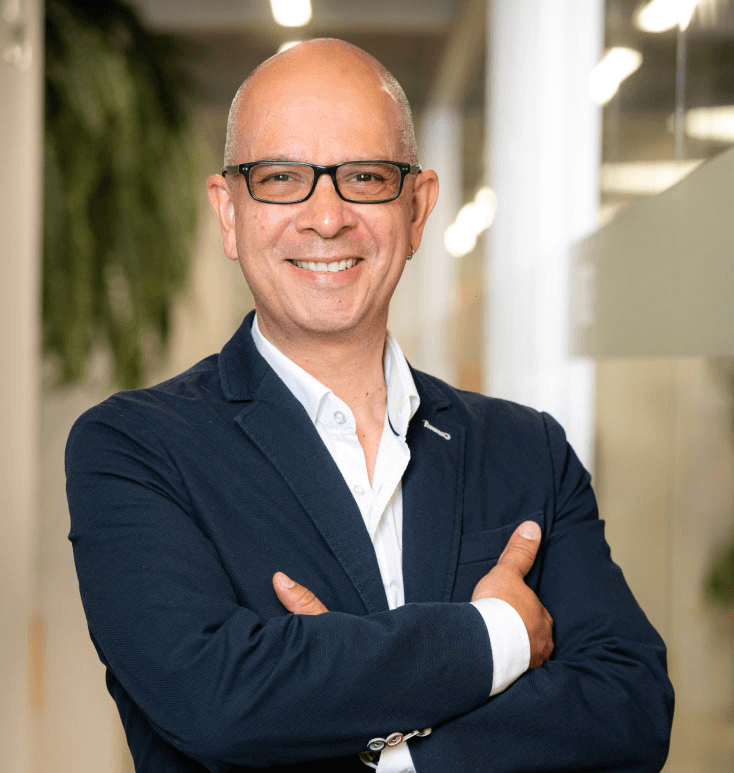
Dr. Juan Carlos Silva-Tamayo
Juan Carlos Silva-Tamayo is a recognized Earth System Scientist whose primary research focuses on the fascinating field of isotope geochemistry. Through the utilization of both traditional and non-traditional stable isotopes, Juan Carlos has investigated how past changes in global climatic and environmental conditions have influenced the global biogeochemical cycles and the evolution of animal life. Currently, Juan Carlos’s research extends to environmental geochemistry from a ONE-Health perspective, highlighting the interconnections between environmental health, animal health, plant health and human health. Lately, Juan Carlos has been spending an important part of his research on the development of pioneering nature-based climate solutions, contributing to the global effort in combating climate change through nature-Based carbon Removal technologies, i.e. enhanced weathering. With an impressive track record, Juan Carlos boasts extensive and well-documented experience in both basic and applied scientific research. He also excels in university teaching, providing valuable knowledge to future generations of STEAM scientists and shaping the next generation of global environmental and sustainability leaders. Moreover, his expertise extends to consultancy and enterprise management, showcasing his ability to bridge the gap between academia and real-world applications. Through his passion for isotope geochemistry and commitment to addressing crucial environmental challenges, Juan Carlos Silva-Tamayo strives to make a lasting impact on our understanding of Earth’s intricate systems and pave the way for a more sustainable future.
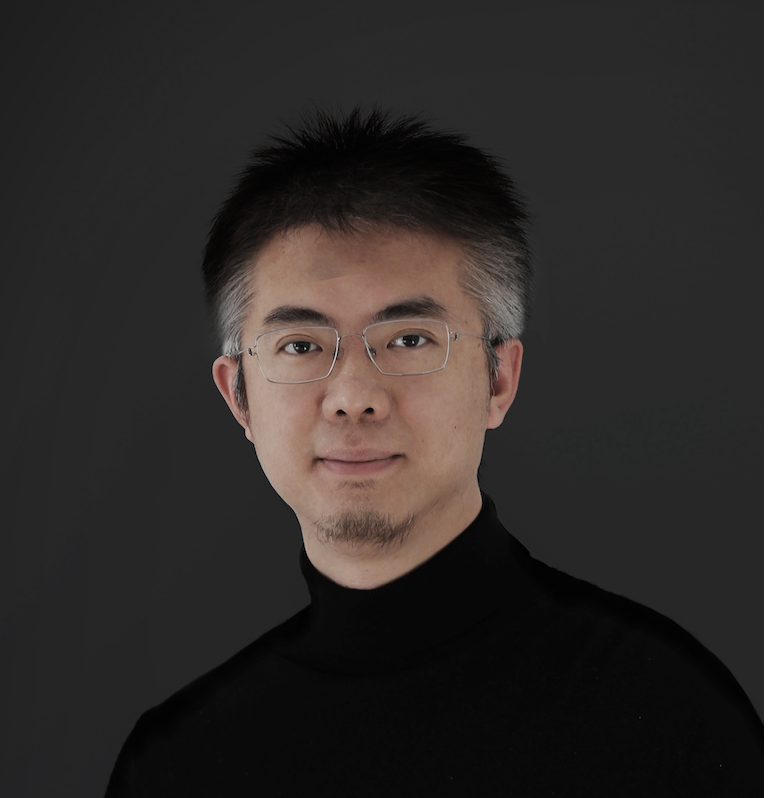
Dr. Max Li
Professor of Columbia University, CEO of OORT
Dr. Max (Chong) Li is a faculty member in the department of electrical engineering at Columbia University (in the City of New York), the founder & CEO of Computecoin Network, co-founder of Nakamoto & Turing Labs Inc. (a New York-based research & consulting firm) and managing partner of Aves Lair (a New York-based VC). He had been working with Qualcomm Research on 4G LTE and 5G systems design. He is an IEEE Senior member, and also the president of Science & Technology Economic Committee at China-US Chamber of Commerce. Dr. Li is a holder of 200+ International/US patents. He has been actively publishing academic papers on top-ranking journals, including Proceedings of the IEEE, IEEE Transactions on Information Theory, IEEE Communications Magazine, Automatica, etc. His paper “Youla Coding and Computation of Gaussian Feedback Capacity” was nominated for the 2019 IEEE Information Theory Society Paper Award (one of the highest honors from the IEEE Information Theory Society). He has also served as reviewer, committee and co-chair for most prestigious journals and conferences in communications and control societies. Dr. Li is a grant review committee member of Natural Sciences and Engineering Research Council of Canada. He is the author of the book "Reinforcement Learning for Cyber-physical Systems" (Taylor & Francis CRC press). Dr.Li received MediaTek Inc. & Wu Ta You Scholar Award in 2007, Rosenfeld International Scholarship in 2012 and Research Excellent Award in 2013. Dr. Li has broad research interests including information theory, machine learning, distributed database and computing systems (e.g., blockchain), networked control and communication, PYH/MAC systems design for advance telecommunication technologies (5G and beyond).