

Curriculum
- 5 Sections
- 44 Lessons
- Lifetime
- Module 1: Understanding Cities and Urbanization14 ItemsLearning Objectives: Understanding the foundational concepts, dynamics, and global frameworks of cities and urbanization.
- 1.1Key Terms
- 1.2Session 1.1: Defining Cities: Conceptual Foundations
- 1.3Quiz 1.1: Knowledge Check1 Question
- 1.4Session 1.2: Cities as “Systems of Systems”
- 1.5Session 1.3: New Urban Agenda
- 1.6Session 1.4: Cities as Drivers of Economic Growth
- 1.7Quiz 1.2: Knowledge Check1 Question
- 1.8Session 1.5: Defining and Understanding Urbanization Through a Global Lens
- 1.9Session 1.6: Major Global Trends
- 1.10Session 1.7: World Urbanization Prospects
- 1.11Quiz 1.3: Knowledge Check1 Question
- 1.12Session 1.8: Sustainable Development Goal 11 – Sustainable Cities and Communities
- 1.13Session 1.9: High-Level Political Forum – UNITAR Session
- 1.14Quiz 1.4: Module 1 Assessment7 Questions
- Module 2: Urban Problems and Planning in an Urban Century19 ItemsLearning Objectives: Understand the key structural challenges facing cities and how planning, data, and emerging technologies are shaping modern urban management.
- 2.1Key Terms
- 2.2Session 2.1: Understanding Urban Problems in an Urban Century
- 2.3Quiz 2.1: Knowledge Check1 Question
- 2.4Session 2.2: Housing Pressures and Informal Urbanization
- 2.5Quiz 2.2: Knowledge Check1 Question
- 2.6Session 2.3: Infrastructure Deficits and Service Provision
- 2.7Session 2.4: Urban Inequality and Spatial Segregation
- 2.8Quiz 2.3: Knowledge Check1 Question
- 2.9Session 2.5: Urban Planning: From Spatial Design to Intelligent Urban Systems
- 2.10Session 2.6: Flashback – Early International Perspectives on Urban Planning
- 2.11Session 2.7: Measuring Cities and Urban Systems
- 2.12Quiz 2.4: Knowledge Check1 Question
- 2.13Session 2.8: Urban Form and Spatial Expansion
- 2.14Session 2.9: Artificial Intelligence and the Future of Urban Planning
- 2.15Session 2.10: Data-Driven Urban Planning
- 2.16Session 2.11: AI in Action: Urban Digital Twins
- 2.17Session 2.12: The Future of AI-Enabled Urban Governance
- 2.18Quiz 2.5: Knowledge Check1 Question
- 2.19Quiz 2.6: Module 2 Assessment7 Questions
- Module 3: AI Infrastructure and Multi-Sector Governance Across Urban Institutions14 ItemsLearning Objectives: Examine how cities scale AI through ecosystem collaboration and institutional coordination.
- 3.1Key Terms
- 3.2Session 3.1: Integrating Infrastructure Data Across City Systems
- 3.3Quiz 3.1: Knowledge Check1 Question
- 3.4Session 3.2: Governance Challenges of AI in Cities
- 3.5Session 3.3: Institutional Coordination for Urban AI
- 3.6Session 3.4: Cross-Sector Partnerships and Ecosystem Collaboration
- 3.7Session 3.5: Fragmentation vs. Ecosystem Coordination
- 3.8Session 3.6: Components of Effective Cross-Sector Collaboration
- 3.9Quiz 3.2: Knowledge Check1 Question
- 3.10Session 3.7: Case Study – AI in Action: How IBM is leveraging AI and multi-sector partnership for ecosystem collaboration
- 3.11Session 3.8: Case Study 2: IBM Sustainability Accelerator – A Multi-Sector Innovation Ecosystem
- 3.12Session 3.9: International Organizations and Standards
- 3.13Quiz 3.3: Knowledge Check1 Question
- 3.14Quiz 3.4: Module 3 Assessment2 Questions
- Module 4: Integrating Cities for Ecosystem Collaboration16 ItemsLearning Objectives: Understand how integrated urban systems and cross-sector collaboration enable cities to anticipate risks, manage interdependent infrastructure, and strengthen resilience through data, technology, and ecosystem partnerships.
- 4.1Key Terms
- 4.2Session 4.1: Urban Risk, Vulnerability, and Cascading Impacts
- 4.3Session 4.2: Sendai Framework for Disaster Risk Reduction
- 4.4Quiz 4.1: Knowledge Check1 Question
- 4.5Session 4.3: Environmental Monitoring, Climate Intelligence, and Urban Sustainability
- 4.6Quiz 4.2: Knowledge Check1 Question
- 4.7Session 4.4: Linking Urban Systems for Integrated Resilience
- 4.8Quiz 4.3: Knowledge Check1 Question
- 4.9Session 4.5: Strengthening Social and Institutional Resilience
- 4.10Session 4.6: Case Study – Urban Nexus Planning in Nairobi and Cape Town
- 4.11Quiz 4.4: Knowledge Check1 Question
- 4.12Session 4.7: AI, Ecosystem Collaboration, and Urban Resource Systems: A multi-part case study into integrated water systems
- 4.13Session 4.8: AI in Action – Case Study 1 – How Poseidon AI is using Artificial Intelligence to integrate aquaculture systems
- 4.14Session 4.9: AI in Action – Case Study 2
- 4.15Session 4.10: Looking to the Future of Integrated Cities and Artificial Intelligence — Floating Cities
- 4.16Quiz 4.5: Module 4 Assessment3 Questions
- Course Assessment1 Item
UNITAR
The United Nations Institute for Training and Research (UNITAR) is a principal training arm of the United Nations, working in every region of the world. We empower individuals, governments and organizations through knowledge and learning to effectively overcome contemporary global challenges. Our training targets two key groups of beneficiaries: the delegates to the United Nations and others who develop intergovernmental agreements establishing global norms, policies, and programmes, and the key national change agents who turn the global agreements into action at the national level.
UNITAR under its 5 pillars offers various training and capacity-development activities in the thematic areas of capacity for the 2030 Agenda, strengthen multilateralism, promote economic development and social inclusion, advance environmental sustainability and green development, promote sustainable peace, and research and technology applications.
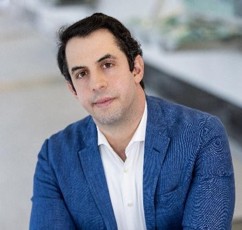
Mr. Michael Jacobs
Sustainability & Social Innovation Leader, IBM
Michael Jacobs is the Sustainability and Social Innovation Leader for IBM Corporate Social Responsibility. He is responsible for planning and managing technology-driven social impact efforts spanning IBM business units. Previously, he served as the Superintendent for Capital Projects at MTA New York City Transit and as a Booz Allen Hamilton consultant – both roles in which he focused on technology systems development and deployment for the public sector. Michael holds a dual Master of Public Administration from Columbia University and The London School of Economics and Political Science and a Bachelor of Arts in International Affairs from The George Washington University. Michael lives in New York’s Hudson Valley with his wife Abby and son Tommy. Their shared love for the outdoors and active pursuits in it drive Michael’s passion for protecting the natural world.
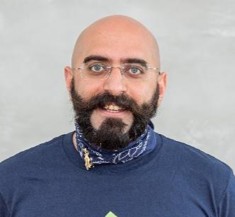
Dr. Amaj Rahimi-Midani
Founder and CEO of Poseidon-AI
Dr. Amaj Rahimi-Midani is an Iranian born Costa Rican, graduated from Pukyong National University (PKNU) in Busan, South Korea. He pursued his postdoctoral as a climate change modeler in Tromso, Norway by analyzing the climate change impact on European freshwater species. As CEO of Poseidon-AI in Singapore, he collaborates with international organizations to implement sustainable practices in water, soil, aquaculture, and fisheries worldwide. He has published multiple peer-reviewed publications and has presented at global meetings, conferences, and congresses. His latest book titled “Deep Technology for Sustainable Fisheries and Aquaculture” published by Springer Nature, show cases the use of AI/ML for sustainable development of farmers, indigenous and vulnerable communities.