

Curriculum
- 5 Sections
- 33 Lessons
- Lifetime
- Introductory Module6
- Module 1: Introduction to Climate Change and SustainabilityLearning Objectives: Trace the history and evolution of climate awareness, Understand key scientific discoveries, such as the greenhouse effect and the Keeling Curve, Analyze global climate policy milestones, including the UNFCCC and the Paris Agreement.12
- 2.1Session 1.1: Climate Science & Impact Analysis – Section 1
- 2.2Session 1.2: Reading Material
- 2.3Session 1.3: Quiz2 Questions
- 2.4Session 2.1: Climate Milestones and Global Frameworks
- 2.5Session 2.2: Reading Material
- 2.6Session 2.3: Quiz3 Questions
- 2.7Session 3.1: Reading Material
- 2.8Session 3.2: Quiz1 Question
- 2.9Session 3.3: Introduction to Sustainability Objectives
- 2.10Session 3.4: Reading Material
- 2.11Session 4.1: Podcast 2030: Sustainability for Future Generations
- 2.12Session 4.2: Activity: Scenario-Based Decision-Making1 Question
- Module 2: Understanding Climate Change and Its ConsequencesLearning Objectives: Trace the history and evolution of climate awareness, Understand key scientific discoveries, such as the greenhouse effect and the Keeling Curve, Analyze global climate policy milestones, including the UNFCCC and the Paris Agreement.15
- 3.1Session 1.1: Climate Science & Impact Analysis – Section 1
- 3.2Session 1.2: Reading Material
- 3.3Session 1.3: Activity: Greenhouse Gas Matching1 Question
- 3.4Session 2.1: Climate Science & Impact Analysis – Section 2
- 3.5Session 2.2: Reading Material
- 3.6Session 2.3: Quiz2 Questions
- 3.7Session 2.4: Case Study
- 3.8Session 2.5: Reading Material
- 3.9Session 2.6: Quiz3 Questions
- 3.10Session 3.1: Reading Material
- 3.11Session 3.2: Quiz1 Question
- 3.12Session 3.3: Reading Material
- 3.13Session 3.4: Quiz1 Question
- 3.14Session 3.5: Reading Material
- 3.15Session 3.6: Self-Assessment3 Questions
- Module 3: Sustainable Development Goals & Net Zero GoalsLearning Objectives: Understand SDGs' role in climate action, focusing on SDG 7 (Clean Energy) & SDG 13 (Climate Action), Explore the transition to net zero, including mitigation & adaptation strategies, Examine sustainable policies and innovations in the Gulf region.10
- 4.1Session 1.1: Reading Material
- 4.2Session 1.2: UNIFEED: Climate Change & Environmental Refugees
- 4.3Session 2.1: Reading Material
- 4.4Session 2.2: Quiz3 Questions
- 4.5Session 2.3: Teaching Sustainability: Global Response to Global Challenges
- 4.6Session 3.1: Reading Material
- 4.7Session 3.2: Activity4 Questions
- 4.8Session 4.1: Teaching Sustainability: Net Positive
- 4.9Session 4.2: Quiz4 Questions
- 4.10Session 4.3: Reading Material
- Module 4: Global Climate Change AgreementsLearning Objectives: Compare the Kyoto Protocol and the Paris Agreement, assessing their strengths and weaknesses, Analyze international cooperation and challenges in climate negotiations, Examine case studies of policy success and failure.6
UNITAR
The United Nations Institute for Training and Research (UNITAR) is a principal training arm of the United Nations, working in every region of the world. We empower individuals, governments and organizations through knowledge and learning to effectively overcome contemporary global challenges. Our training targets two key groups of beneficiaries: the delegates to the United Nations and others who develop intergovernmental agreements establishing global norms, policies, and programmes, and the key national change agents who turn the global agreements into action at the national level.
UNITAR under its 5 pillars offers various training and capacity-development activities in the thematic areas of capacity for the 2030 Agenda, strengthen multilateralism, promote economic development and social inclusion, advance environmental sustainability and green development, promote sustainable peace, and research and technology applications.
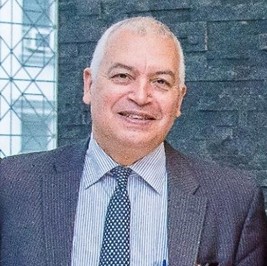
H.E. Mr. Marco Suazo
Head of the UNITAR New York Office
Head of the United Nations Institute for Training and Research New York Office (UNITAR-NYO) and Senior Advisor to the Executive Director of UNITAR since October 2015.
Mr. Suazo is a career diplomat and former Ambassador who served as Deputy Permanent Representative of Honduras to the United Nations in New York.
During his tour of duty in the United Nations for 27 years, Mr. Suazo served as Chair of two of the Main Committees of the General Assembly. In 2002, he chaired the Second Committee on Economic and Financial issues during the 57th session of the General Assembly (throughout this session, the Office of Finance for Development was created in the United Nations Secretariat, following the Monterrey Conference on Financing for Development); and in 2008, he chaired the First Committee on Disarmament and International Security during the 63rd session of the General Assembly.
Mr. Suazo has served as representative of Honduras in the Security Council 1995-1996 as political coordinator and after as an Advisor in the Public Administration Division at the Department of Economic and Social Affairs (UNDESA); ex officio member at the United Nations Foundation Executive Board; Deputy Director at the Ministry of Foreign Affairs of Honduras; and Minister Counsellor in the Embassy of Honduras in Managua, Nicaragua.
Mr. Suazo has published several articles on the United Nations matters and two books related to Honduras’ history and its participation in the Organization as a founding member. The first one is entitled “Our History- Honduras in the United Nations 1945-2005” and it was published on the 60th Anniversary of the United Nations (2005) and the second one, “We the People” in 2013. Mr. Suazo is working in his third publication. In 2015, he was awarded with the title of “Commedatore of the Republic of Italy” which is a high distinction given by the Italian President and offered by the President of the Chamber of the Parliament.
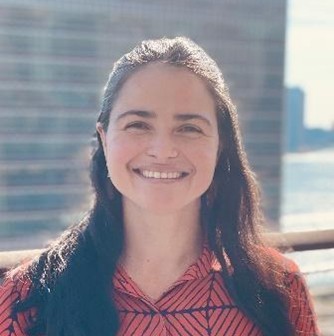
Ms. Jimena Leiva-Roesch
Director of Global Initiatives and Head of Peace, Climate, and Sustainable Development at the International Peace Institute
From 2009 to March 2015, Ms. Leiva-Roesch was at the Permanent Mission of Guatemala to the UN in New York, where she last served as Counselor. She was the lead negotiator for Guatemala for the 2030 Agenda and for UN climate change negotiations. She has represented the Group of 77 and China in negotiations at the UN. She was also invited to be a facilitator in the Rio+ 20 negotiations. She was an active member of Guatemala’s Security Council team from 2012-2013, where Guatemala was a non-permanent member of the Council. She is currently IPI’s Director of Global Initiatives, where she leads the climate change and sustainable development program.